
Self-Raising Wheat Flour
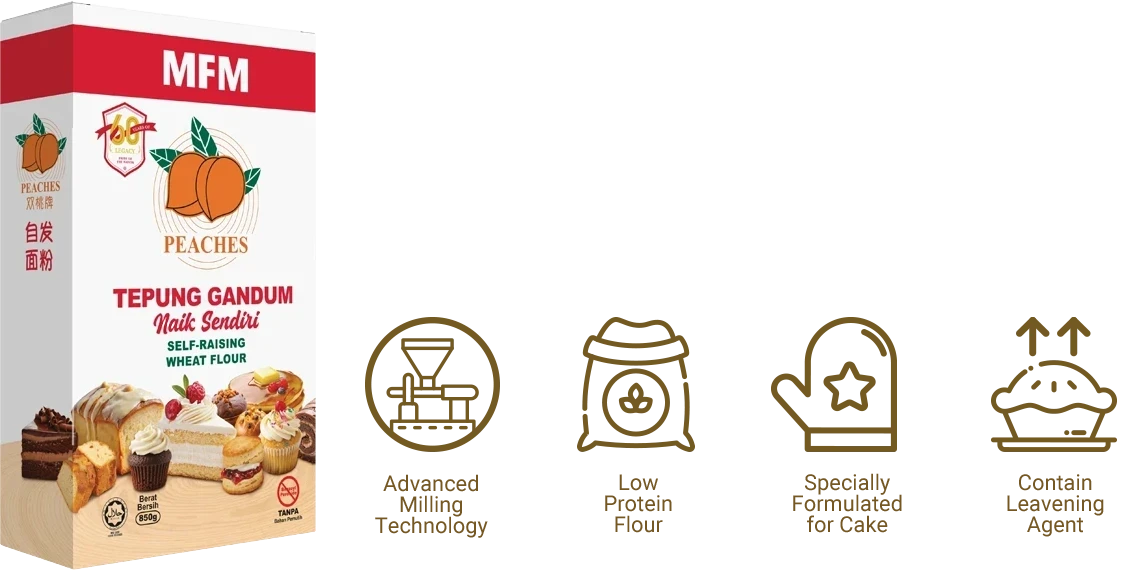
This self-raising flour is often regarded as a ‘convenience mix’. When incorporated into a recipe, it enables the omission of baking powder as directed in the recipe.
Elevate your baking experience with MFM, ensuring your creations boast a delightful, moist texture that will undoubtedly leave a lasting impression.
Nutritional Information
Nutrition Information / Maklumat Pemakanan
| Saiz Hidangan / Serving Size | 250g |
| Hidangan Setiap Pek / Servings Per Pack | 3.4 |
| Setiap 100g / Per 100g | Setiap Hidangan / Per Serving | |
|---|---|---|
| Tenaga / Energy | 345 kcal | 862.5 kcal |
| Karbohidrat / Carbohydrate | 76.0 g | 190.0 g |
| Jumlah Gula / Total Sugars | 0.1 g | 0.25 g |
| Protein / Protein | 8.0 g | 20.0 g |
| Lemak / Fat | 1.0 g | 2.5 g |
| Natrium / Sodium | 321 mg | 802.5 mg |
| Tiamina / Thiamine (Vitamin B1) | 0.42 mg | 1.05 mg |
| Riboflavin (Vitamin B2) | 0.48 mg | 1.20 mg |
| Niasin / Niacin | 5.40 mg | 13.50 mg |
| Zat Besi / Iron | 4.20 mg | 10.50 mg |
Ingredients of Self-Raising Wheat Flour
Storage Instructions for Self-Raising Wheat Flour
Origin of Self-Raising Wheat Flour
Malaysia
FAQ
Are self-raising and self-rising flour the same?
Yes, “self-raising” and “self-rising” flour are the same. Both terms are used interchangeably to describe flour with baking powder and salt mixed in. This pre-mixed combination provides leavening (rising) to baked goods without additional ingredients.
Find out the different types of flour here to gain more insights.
Is self-raising flour the same as all-purpose flour?
What happens if I use plain flour instead of self-raising flour?
How do I make self-raising flour from plain flour?
Follow this basic recipe: Combine 1 1/2 teaspoons of baking powder and 1/4 teaspoon of fine salt for every 1 cup of all-purpose flour. Whisk the ingredients thoroughly in a large bowl or place them in a glass jar, shaking well.
However, we don’t encourage it. Creating self-raising flour at home can be tricky due to challenges in achieving the correct ratio of baking powder to flour, potential uneven blending, and difficulties in accurate storage and measurement, leading to inconsistent baking results.
Therefore, to ensure the best outcome and consistency in your baking, it’s handy to have at least a pack of commercially available self-raising flour at home, such as MFM Peaches Self-Raising Flour.